Municipal Leaders: Develop Faster, Lead Stronger, Build Better

Every week, you’ll get insights and actionable steps to help you navigate personal growth and professional success.

Every year, a handful of local government leaders decide they’re done leading by accident.
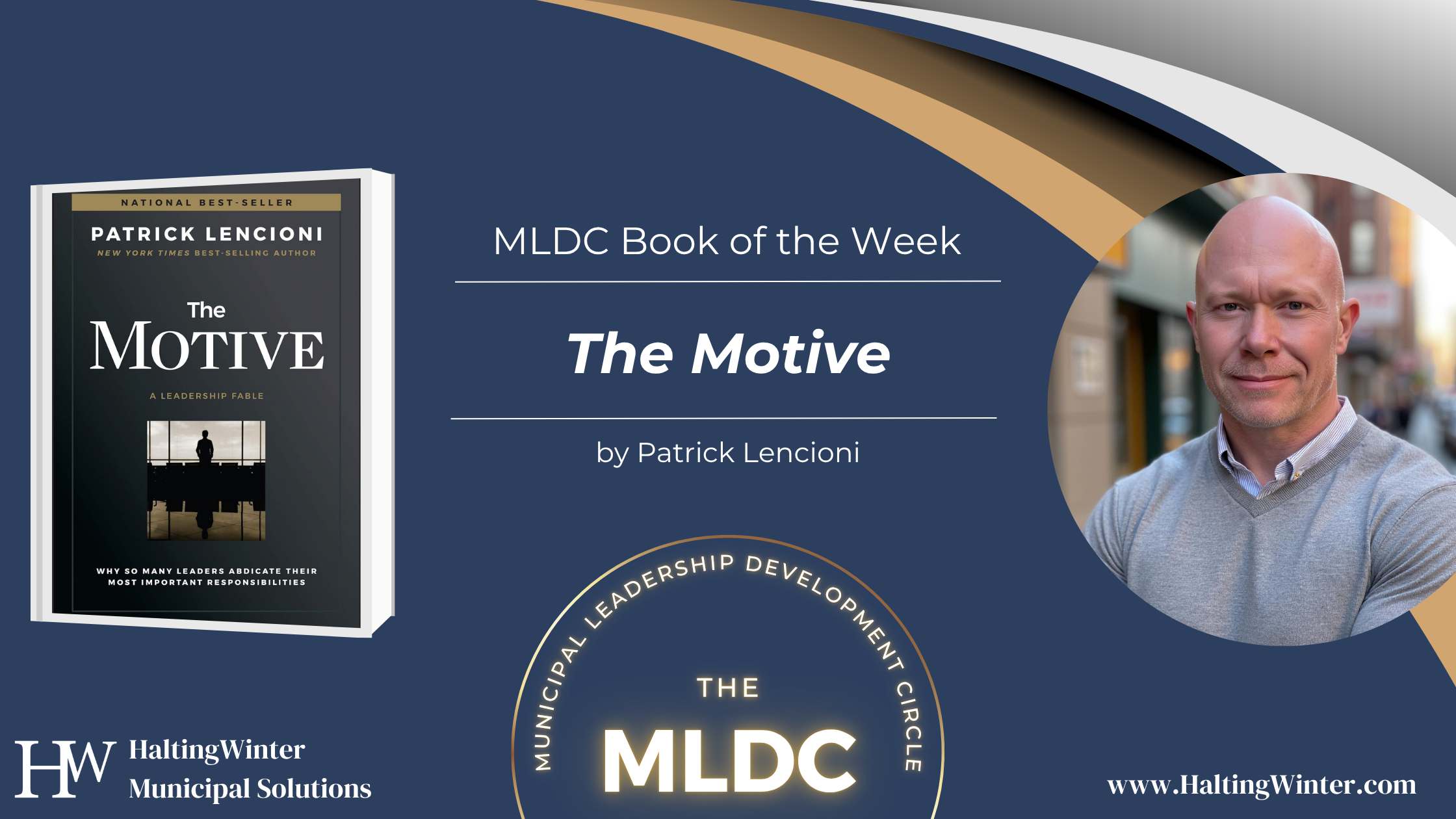
They stop treating their role as something that happened to them — a promotion, a title, a reward for tenure — and start treating it as what Patrick Lencioni calls it in his book The Motive: a responsibility. One they chose. One they’re going to do well, even the parts that are hard, slow, and unglamorous.
This week in the MLDC, we dig into that distinction: the difference between reward-centered and responsibility-centered leadership, and why it shows up faster and more visibly in city halls and county offices than almost anywhere else. If you haven’t listened to the episode on The HaltingWinter Podcast yet, it’s worth the five minutes.
But listening is the easy part. The harder part — the part that actually changes how you lead — happens with the right people, in the right room, held accountable over time. That’s what MLDC is built for.
2027 memberships are open now, and applications for our January Mastermind groups are open too. These are small, limited groups of local government leaders working through exactly this kind of material together — not alone, not once a year at a conference, but consistently, with people who understand the job because they’re living it too.
Spots are limited, and the application deadline is October 31st.
Secure your 2027 MLDC membership and apply for a January Mastermind group at HaltingWinter.com/MLDC before October 31st.
The Municipal Leadership Development Circle (MLDC), led by Seth Winterhalter, is a community for city and county managers, administrators, and local government leaders who believe leadership shouldn’t be carried alone. Through trusted peer relationships, candid conversations, and practical leadership development, the MLDC creates space for municipal leaders to think differently, grow intentionally, and navigate the challenges of leadership alongside people who understand the weight of the work. Learn more at HaltingWinter.com/MLDC.

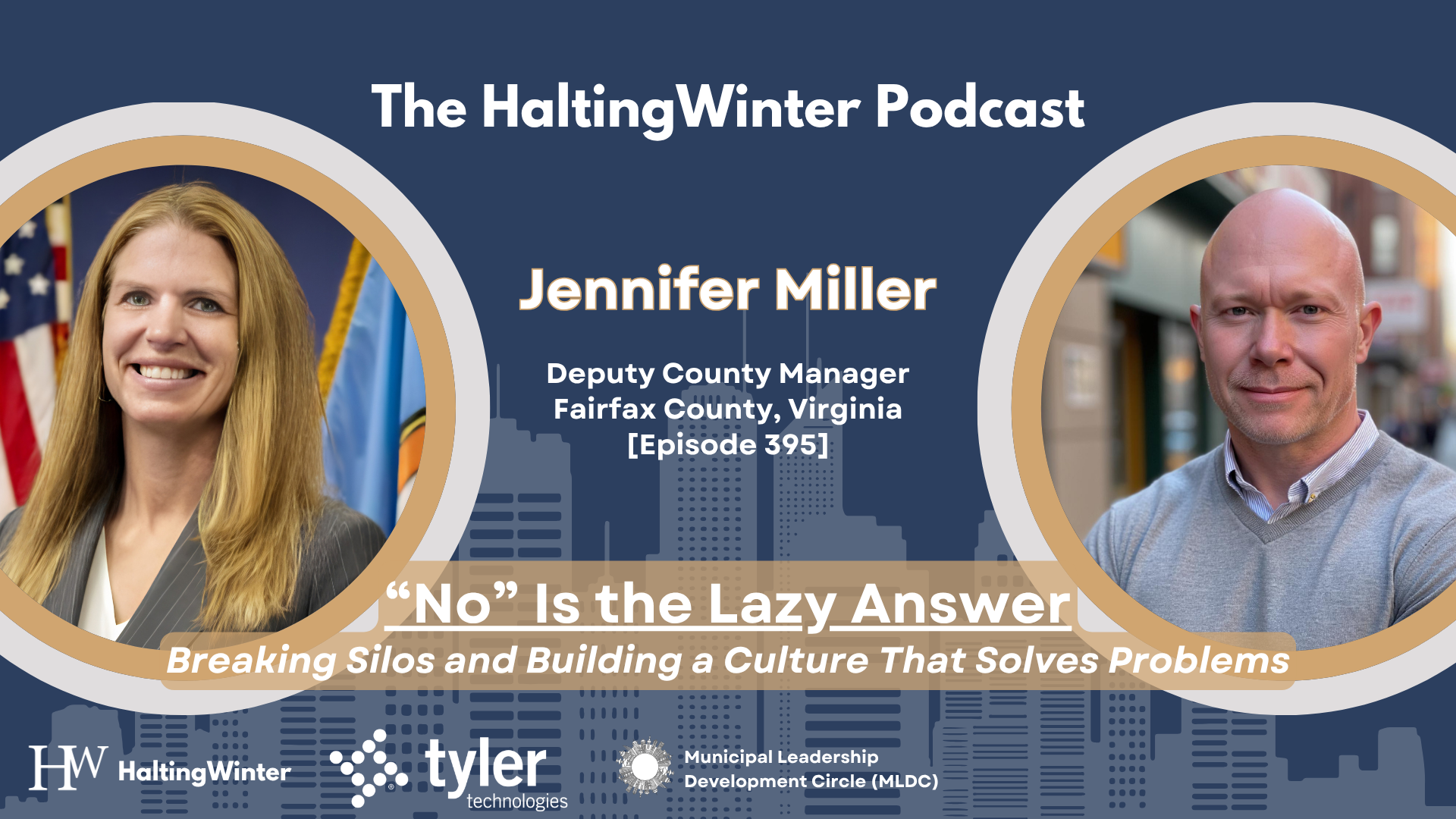
Episode 395 of The HaltingWinter Podcast
Sponsored by Tyler Technologies
There are plenty of legitimate reasons to say no in local government. The policy doesn’t allow it. The budget isn’t there. Another department owns it. The request doesn’t meet the requirements.
But during my conversation with Jennifer Miller, Deputy County Executive for Fairfax County, Virginia, she said something that stuck with me:
“It’s so much easier to say ‘No.’ But that is such a lazy answer.”
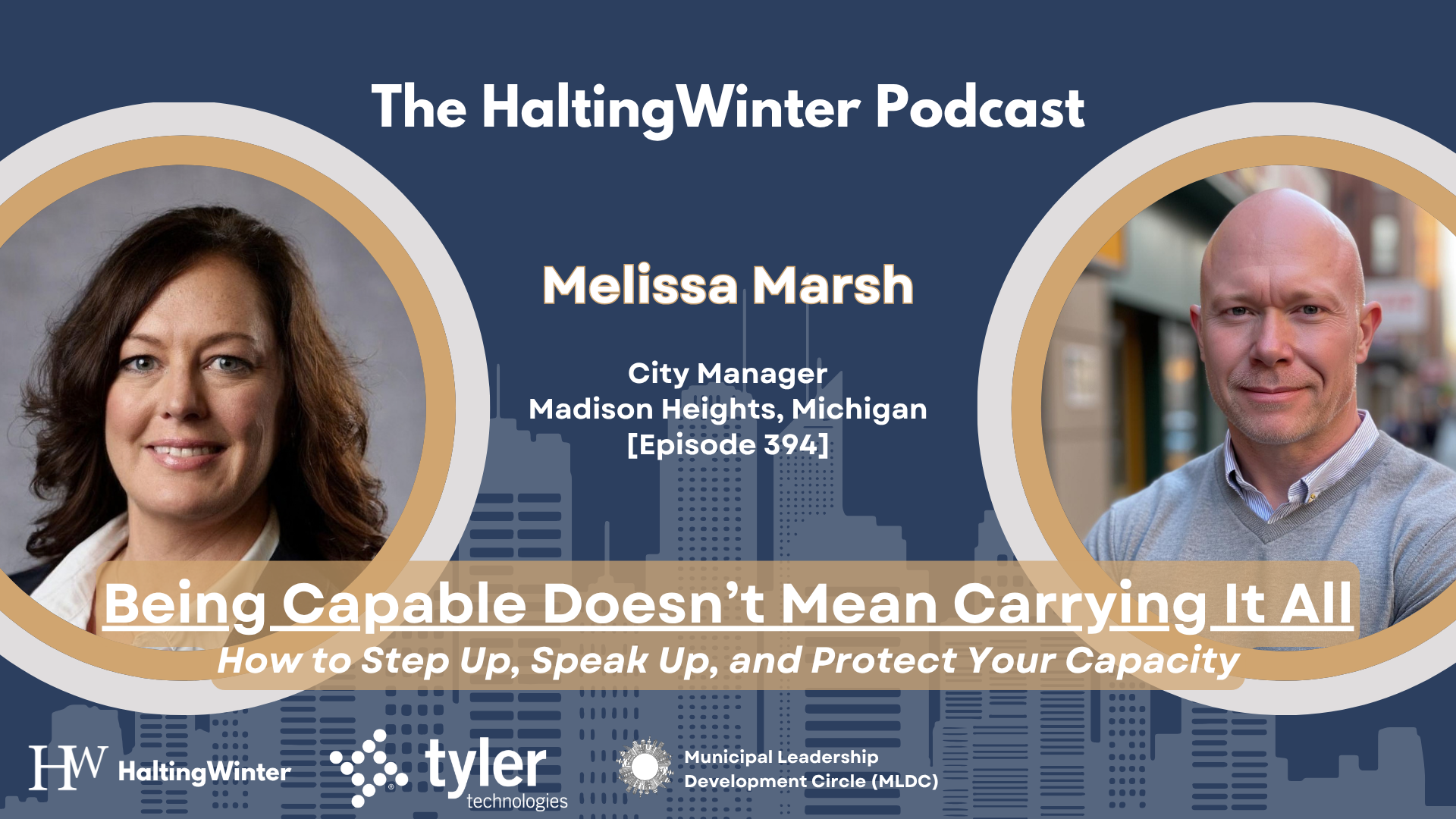
Episode 394 of The HaltingWinter Podcast
Sponsored by Tyler Technologies
The people who rise in local government are often the ones willing to do more than what’s asked of them.
They raise their hand. Take on responsibilities outside their job description. Solve problems no one asked them to solve. And over time, they prove they can carry more.
That’s been true throughout Melissa Marsh’s career. Long before becoming City Manager of Madison Heights, Michigan, Melissa built a reputation for stepping up and taking on more. But eventually she discovered the other side of being the person everyone knows can handle it:
When you become really good at carrying more, people can stop noticing how much you’re carrying.
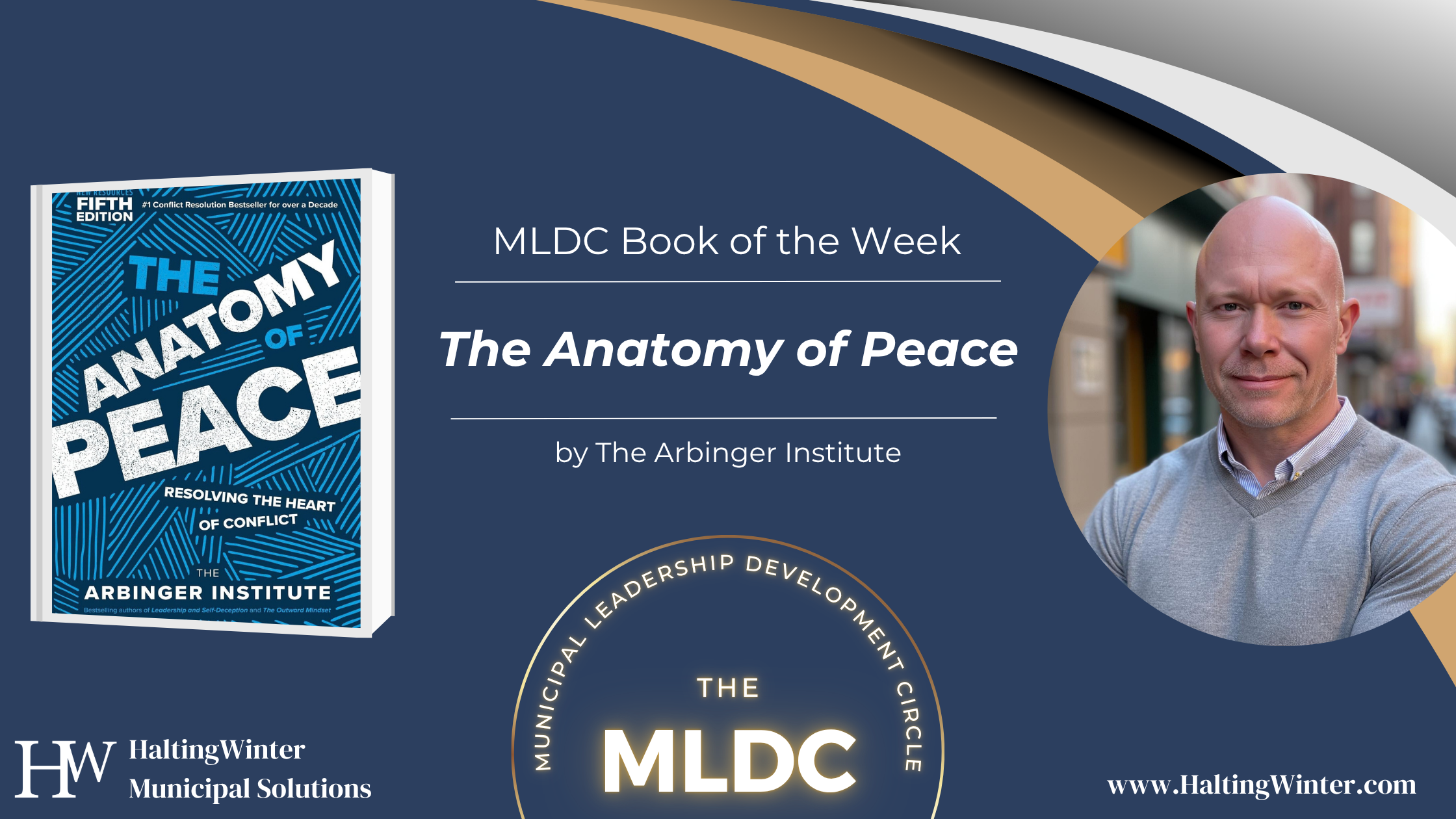
Yusuf, a Palestinian, and Avi, an Israeli…each lost his father to the other side’s conflict. Instead of carrying that forward, they built a program together for resolving the kind of conflict that seems permanent: the kind where both sides are certain, with real evidence, that they’re the reasonable one.
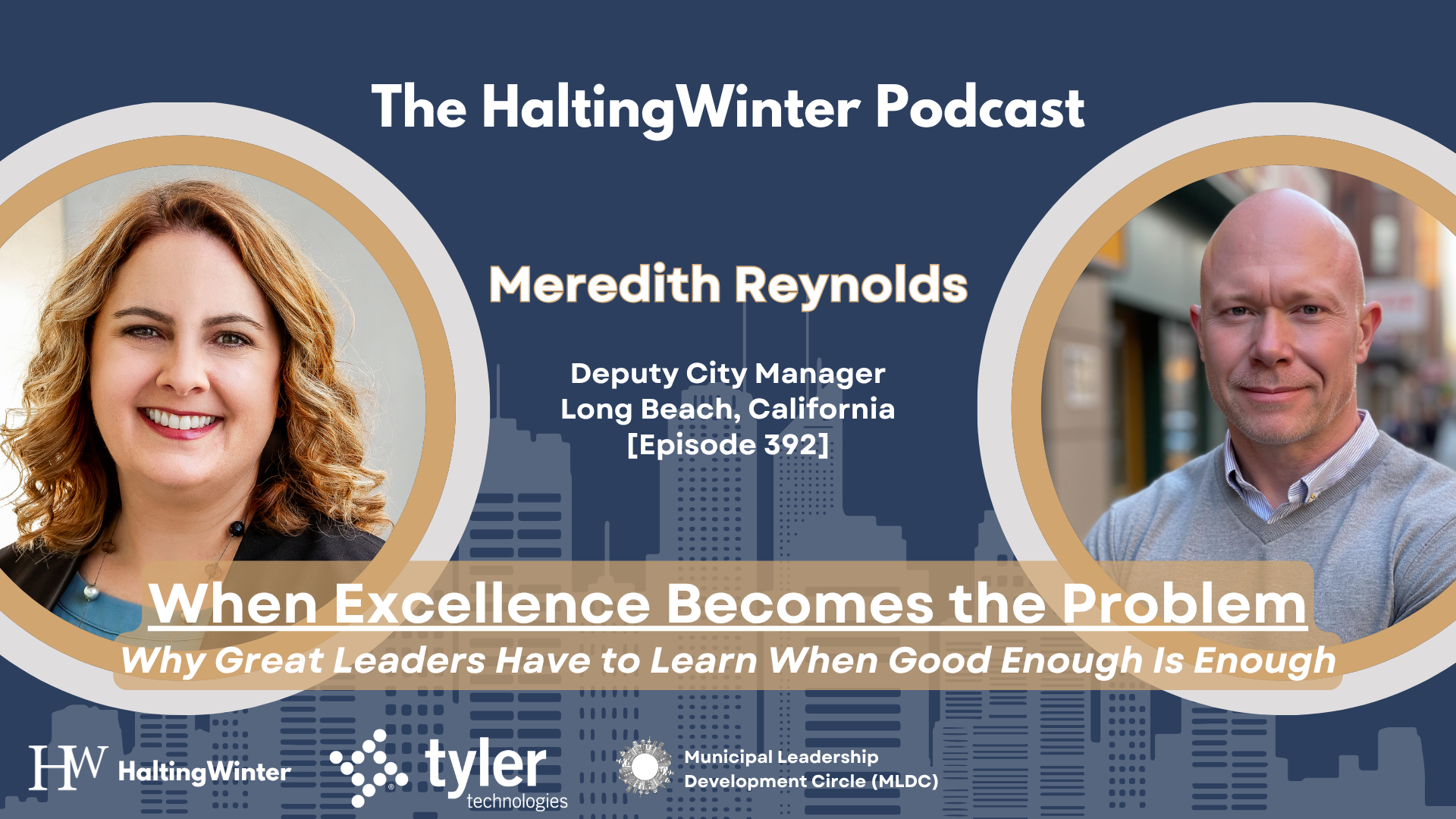
Episode 392 of The HaltingWinter Podcast
Sponsored by Tyler Technologies
Excellence is a good thing. Until the pursuit of it starts getting in the way of leading well.
In Episode 392 of The HaltingWinter Podcast, Seth Winterhalter sits down with Meredith Reynolds, Deputy City Manager for the City of Long Beach, California, to talk about a lesson many high-achieving local government leaders eventually have to learn:
Not everything requires an A+.
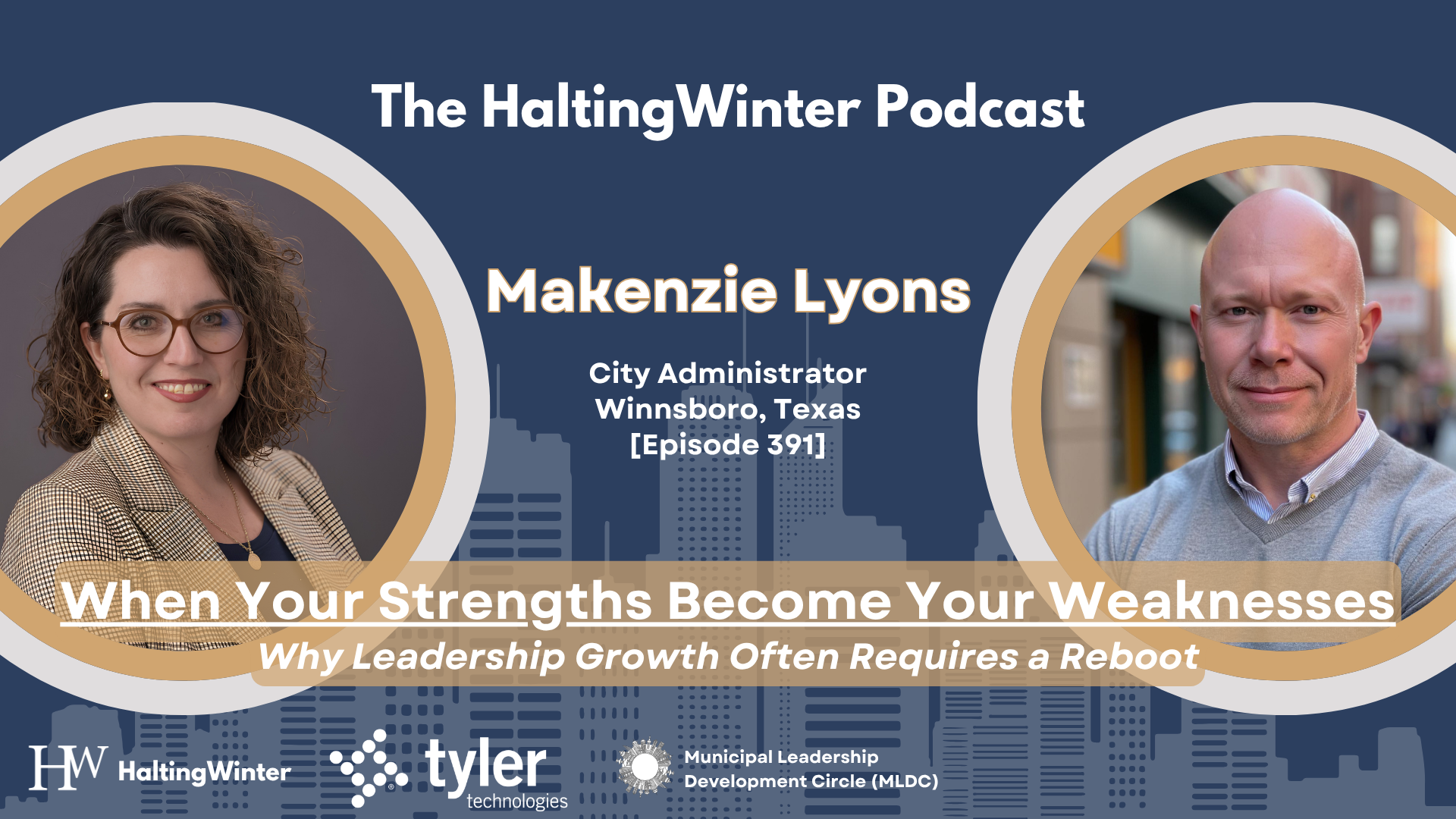
Episode 391 of The HaltingWinter Podcast
Sponsored by Tyler Technologies
The qualities that help us survive, succeed, and advance in our careers aren’t always the same qualities we need for the next stage of leadership.
For Makenzie Lyons, City Administrator of Winnsboro, Texas, resilience, independence, decisiveness, and control were strengths. They helped shape who she became. But as her leadership responsibilities grew, Makenzie began to recognize that some of those same strengths were getting in the way of relationships, collaboration, and her ability to lead others effectively.
You know the pairing. Two capable, well-intentioned leaders in the same organization who somehow can’t get on the same page. One comes across as blunt, maybe even cold. The other comes across as vague, like they’re circling the real point instead of landing on it. Neither would describe themselves that way. Both would tell you they’re simply doing their job the way it should be done.
So what’s actually going on?
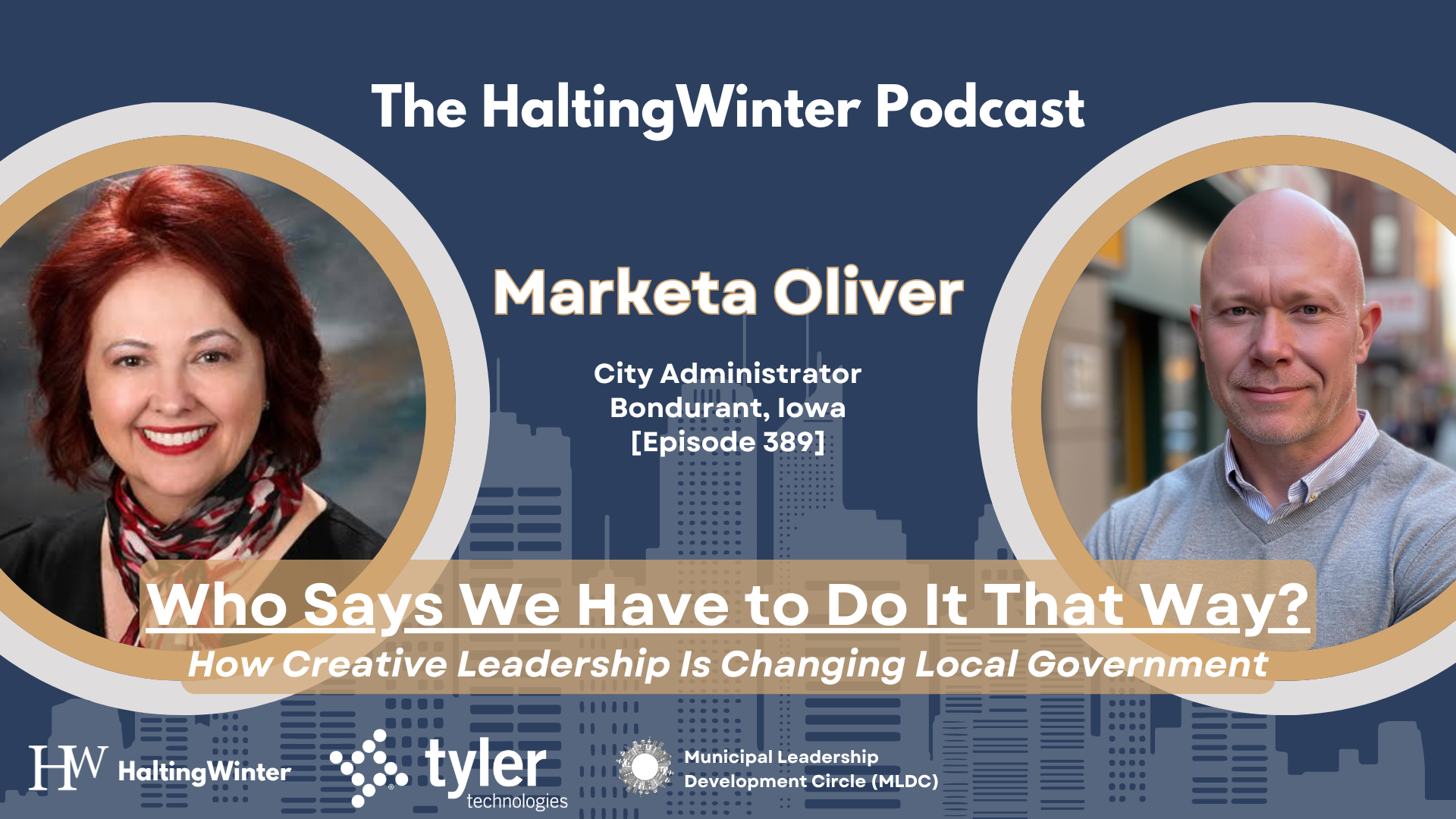
Episode 389 of The HaltingWinter Podcast
Sponsored by Tyler Technologies
Local government is full of systems, processes, and traditions built for good reasons. But what happens when the way we’ve always done something is no longer the best way forward?
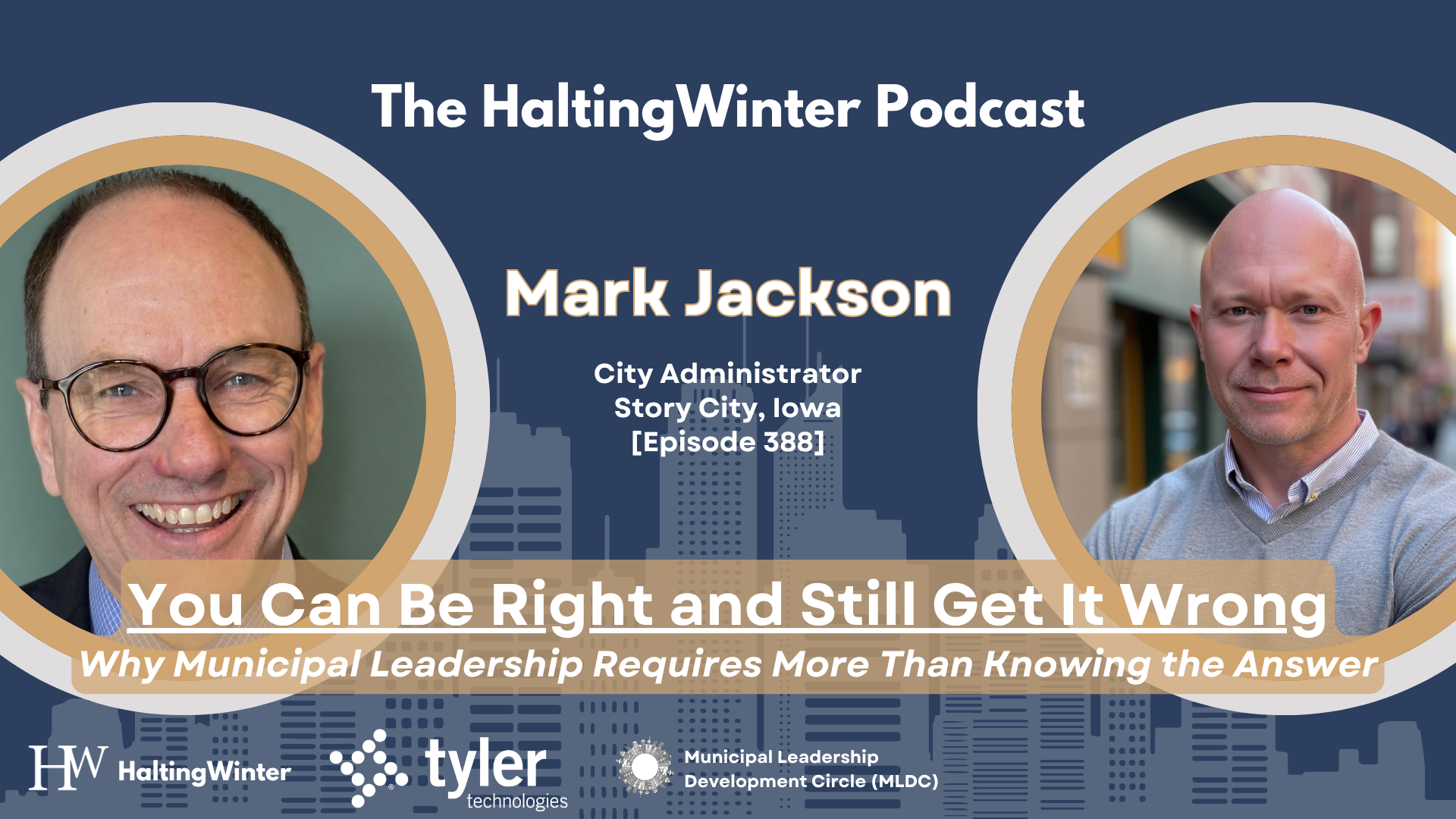
Episode 388 of The HaltingWinter Podcast
Sponsored by Tyler Technologies
There’s a hard lesson every local government leader eventually learns: Having the right answer doesn’t necessarily mean you’ve led well.
Mark Jackson learned that lesson early in his career.
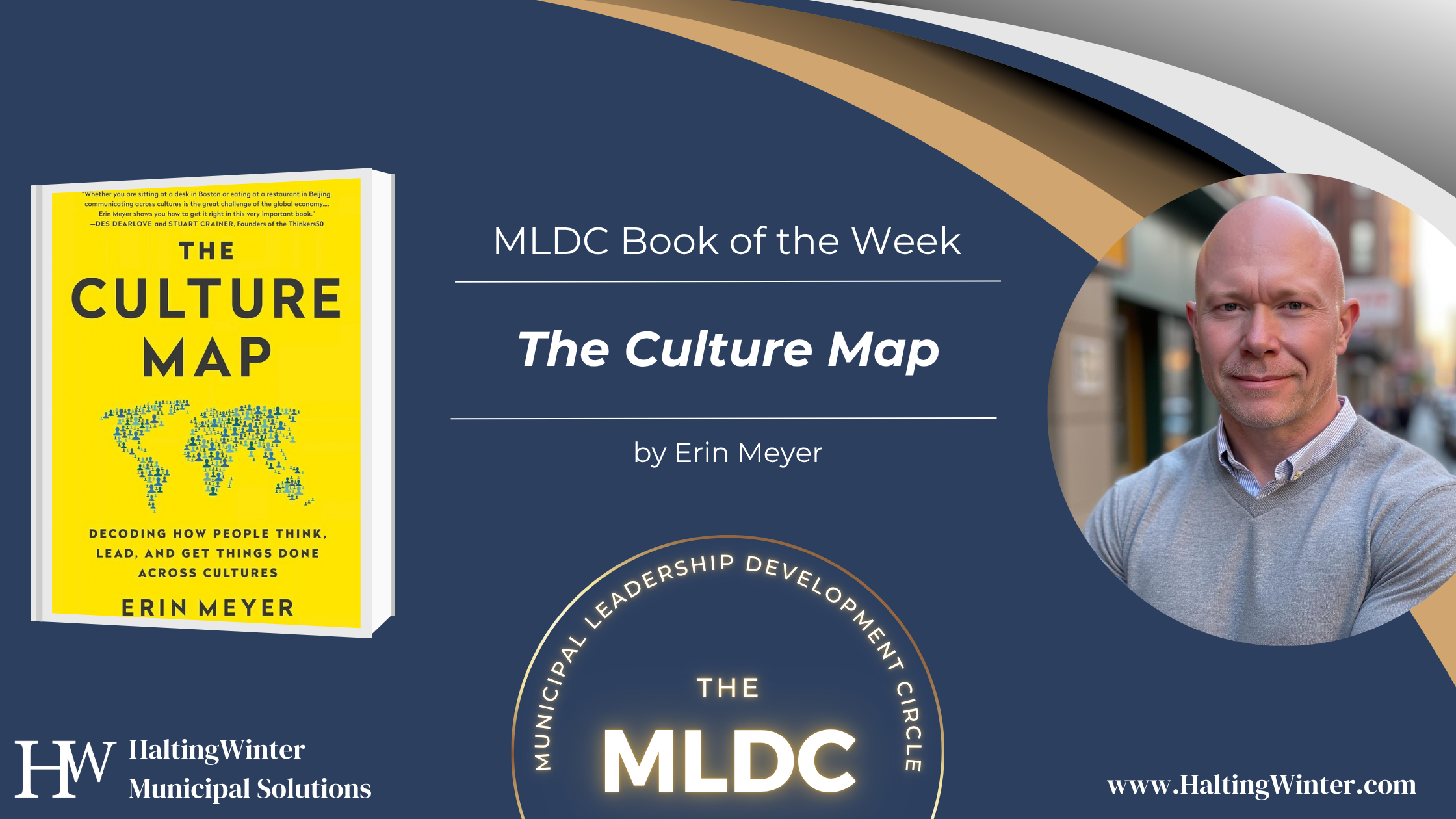
There’s a specific kind of exhaustion that shows up in high-performing local government leaders. It isn’t burnout from doing too little. It’s the fatigue of doing a lot: closing budget gaps, filling vacant positions, navigating a difficult council relationship, finally getting a long-delayed capital project off the ground, and somehow never feeling caught up. The to-do list gets shorter, yet the feeling of being behind doesn’t improve.
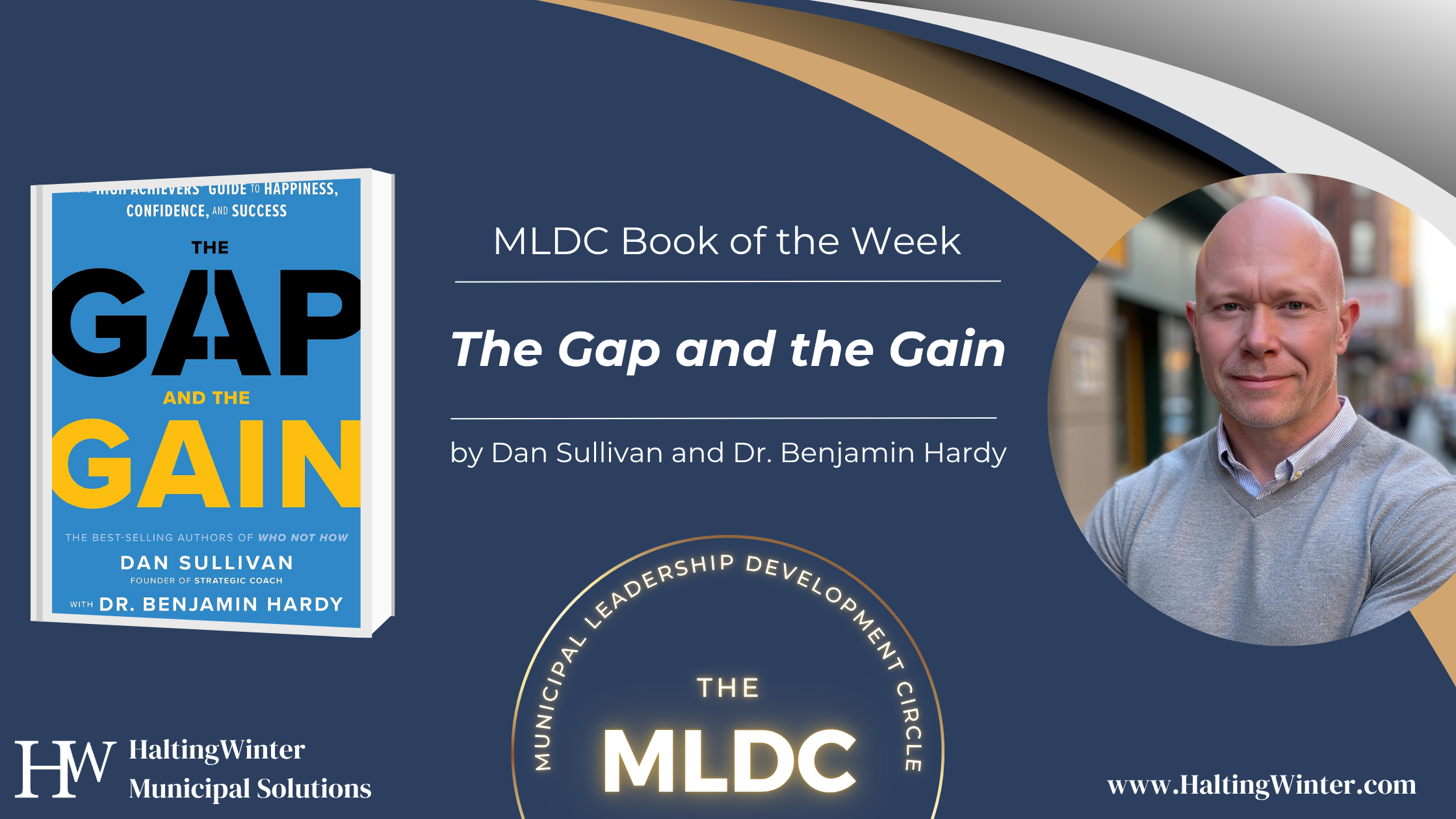
The Gap and the Gain, by Dan Sullivan and Dr. Benjamin Hardy, has a straightforward explanation for that feeling, and it isn’t about work ethic, resilience, or how many hours you’re putting in. It’s about math. Specifically, which direction you’re measuring in.